How to Adjust Hearing Aid Settings for Outdoor Noise
Spending time outside in the Hudson Valley means hearing a lot at once.

By: admin | March 25, 2026
Most people don’t think about their hearing until something feels off, and that’s understandable. It’s not the kind of thing that comes up in conversation or gets much attention until there’s a reason to pay attention to it.
But hearing doesn’t usually change all at once. It shifts slowly, in ways that are easy to miss or explain away, and by the time something feels noticeably different, it’s often been changing for a while.
Knowing where your hearing stands after 40 isn’t about expecting bad news. It’s about having a reference point, something to measure against if things do start to shift, so you’re not left trying to figure out when exactly things changed or by how much.
The people in your life, the conversations you have at work, the things you do for yourself, all of that is tied to how well you’re able to hear and engage with the world around you.
Keeping tabs on your hearing is just part of looking after yourself, the same way you would with anything else that matters to how you feel and function day to day.
Hearing doesn’t usually fail overnight. Instead, it slowly fades as you move through your 40s and 50s. You might think people have started to mumble or that restaurants are just noisier than they used to be.
In reality, your ears are simply losing the ability to pick out specific sounds. Most people don’t notice this shift because the brain is remarkably good at filling in the gaps with guesswork until the strain becomes too much to ignore.
Your friends or family are often the first to spot the problem. They might mention that the TV volume is uncomfortable or notice that you ask “What?” more than usual.
These moments are easy to dismiss as a one-time distraction, but they are usually the first signs that your inner ear needs a check.
Aging changes the physical structure of the ear in ways that are hard to see. Inside your inner ear, thousands of tiny hair cells act as sensors for sound waves.
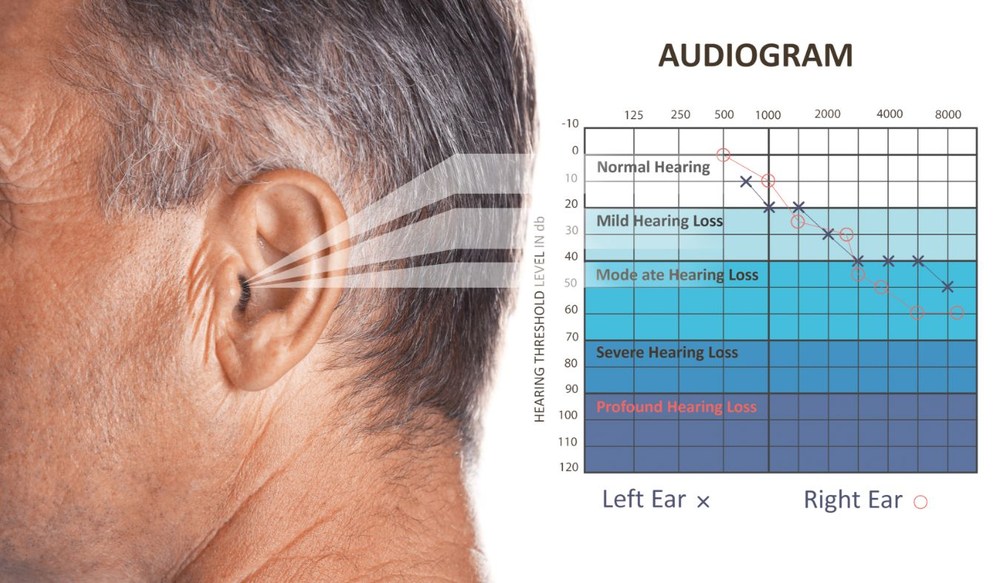
Over decades, these cells wear down or die off from constant use, and unlike skin or bone, they do not grow back. This type of loss usually hits the high-pitched sounds first, which is why a child’s voice or the chirp of a bird might be the first things to fade from your daily life.
The struggle isn’t just about volume; it is about clarity. When these sensors fail, your brain receives a garbled signal that makes speech sound like a series of muffled vowels. Consonants like “s,” “f,” and “t” disappear, which makes it feel like everyone around you has started to mumble.
This process is so slow that you might blame a noisy room or a fast talker for months before you realize your own ears are simply struggling to keep up.
makes itself known through you. You start noticing other people’s behavior before you notice your own, and by the time the pattern is obvious, it’s usually been there for a while. Some of the more common signs worth paying attention to include:
Hearing gets checked at more points in your life than most people realize. Newborns are screened before they leave the hospital, and children are tested again at regular intervals through school, usually before they start and at several points along the way.
Those early checks matter because hearing plays a big role in how kids develop language and learn.
That gap is where things tend to slip. For adults with no known hearing loss, a baseline test around age 18-21 is a reasonable starting point, followed by a check every decade or so through your 40s.
Once you hit 50, most hearing specialists recommend coming in every three years at minimum, and after 60, it becomes every one to two years because age-related hearing changes become more common and tend to move faster.
If you work in a loud environment, have a history of ear issues or have close family members with hearing loss, more frequent checks make sense regardless of your age.
For people who already have a diagnosed hearing loss, the schedule looks different. Annual visits are generally the standard, both to monitor any changes and to make sure your hearing aids or devices are still calibrated to where your hearing actually is.
Hearing loss doesn’t always stay the same, and a device that was fitted two years ago may not be giving you what you need today.
Specific health issues and lifestyle choices often speed up the wear on your ears.
While age is a primary factor, other medical conditions can damage the delicate parts of the inner ear or the nerves that send sound to the brain. Identifying these risks helps you and your specialist stay ahead of potential changes before they impact your daily life.
Several factors play a significant role in the health of your hearing:
To determine how to address your hearing, a specialist must first understand the specific way you experience sound. They will ask about the situations where you struggle most, like large parties or phone calls.
They also check for symptoms like ringing or a plugged-up feeling. This conversation helps them pinpoint which parts of your hearing need the most attention.
A hearing professional uses several different tests to evaluate your hearing health:
Reviewing your results is the best time to clarify what those numbers mean for your life. You should leave the office with a solid understanding of your specific loss and what can be done to manage it.
Ask your hearing professional the following:
The answers to these questions help you move toward a solution without any guesswork. A good specialist takes the time to ensure you feel informed and ready to handle the next steps.
If a specialist determines that your hearing loss is permanent, hearing aids are the most widely recommended treatment. These devices come in a range of styles and sizes, making it easy to find a solution that fits your specific needs. Your hearing professional will talk to you about the best options for your situation based on your degree of hearing loss, lifestyle, budget and aesthetic preferences.
Your professional will also program these devices to your exact hearing specifications. This means testing settings in real time to ensure you can go about your day-to-day activities without interruption. You usually return for a few follow-up visits to refine these settings as you get used to the new sound levels.
There’s no wrong time to get your hearing checked, but there are better times than others, and before you notice a problem is one of them. If you’re over 40 and haven’t had a hearing test recently, or if you honestly can’t remember the last time you did, that’s worth acting on.
Not because something is necessarily wrong, but because knowing where you stand now means you’ll actually notice if something changes later.
At Hudson Valley Hearing Aid Center, we’re here when you’re ready to do that. Our teams in Lake Katrine, Poughkeepsie and Rhinebeck, NY are easy to reach at (845) 481-9267. Come in, find out where things stand and go from there.
Tags: how to guides, speech tests, tympanometry
Spending time outside in the Hudson Valley means hearing a lot at once.
By: admin | August 24, 2026
If you have ever taken a hearing aid out mid-walk because it felt like too
By: admin | May 18, 2026
Most people don’t think about their hearing until something feels
By: admin | March 25, 2026